Evolutionary, not revolutionary. "But Matthew you idiot! Volvo is conservative! That's the way Volvo does it..."
 Not true. Not every new model is revolutionary, but there have been many bold, untried designs that Volvo has put out over the years.
 - The tail lights that go up all the way to the roof started on the 1994 850 wagon, and since then many many cars and SUVs have adopted that design element for a simple reason: higher-up brake lights = safety.
- Thor's Hammer headlights was a nice, strong design element in 2015 and lives on to this day, in this new EX90 even.
- Also, the design language of the P2 models was incredibly fresh -- the "hips" -- and still looks decent today.
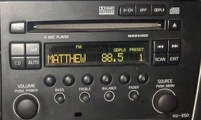
My prediction is that there is going to be a minor revolution in understanding safety as it applies to distracted driving, and tapping and touch screens are going to be considered the Devil, which they absolutely are. I wrote about that here.
This is a huge problem, and I see Volvo eating lots of crow about this over the next decade. As I type this, I have a rental VW Tiguan with this capacitive touch interface and it's bad, awful for driving. Terrible.
It's not possible to overstate this.
Mark my words on this. We'll see a groundswell in the auto industry to get back to physical buttons, very soon. I can't believe Volvo fell into this trap.
Volvo's EX90 page
Lidar and Safe Space Technology
The advanced standard exterior sensor set with radars, cameras and ultrasonic sensors is in Volvo EX90 complemented with a lidar that continuously scan the environment in front of the car, enabling an accurate and high-precision estimate of the shape and size of objects in three-dimensional understanding of the surroundings. By combining the understanding of the outside environment with understanding the state of the driver, we can detect when the driver needs extra support and put in place countermeasures to preserve the safety margins.
Pilot Assist - enhanced driver assistance
The Volvo EX90 enhanced driver assistance makes your journey smoother and more relaxing. The car can help keep an eye on the traffic and lane markings and support you by adapting your speed and distances given the current driving conditions. It can provide speed control in steep curves and steering support while changing lanes. If the car detects any sign of the driver being unresponsive it can brake the car to a standstill within the lane.
- overviewmediaitem-1-5-16x9.jpg (49.67 KiB) Viewed 546 times
- download.jpg (91.95 KiB) Viewed 546 times
- Screenshot 2022-11-09 at 10.20.27 AM.jpg (27.86 KiB) Viewed 546 times
- Screenshot 2022-11-09 at 10.20.08 AM.jpg (37 KiB) Viewed 546 times