


1999 S70. . Air box hose question (w/PIC)
-
ashlee2319

- Posts: 131
- Joined: 24 Mar 2013, 14:39
- Year and Model: 2000 V70 NA
- Location: Cambridge, MA
- Has thanked: 3 times
- Been thanked: 2 times
Ok, i will do that. O'reilly has a fuel injector kit which include 2 o-rings, a pintle cap, and a spacer. Is this right?
2000 V70 N/A
1999 V70 GLT - Current project car
1999 V70 GLT - Current project car
That should be right. Just check to see if it is compatible for the 1999 S70. You do not need the cap only the spacer and the "o" rings. Since you seem to have change the upper rings you only need to change out the lower set.
A word of caution, on most of the kits the lower spacer does not attach to the injector. Rather it sits freely in the injector recess. I am not certain if your injector has the rings attached. If the are attached they are are in need of replacement they need to be pried off. The new spacers should be placed in the recesses, just do not drop any. You will never find it again and will need to by a new kit. Not to worry either since they can not fall into the cylinder since their diameter fits exactly that of the recess. Also careful not to get dirt into the cylinder. I forgot to add, you should not need the pintle cap
Also, check your injector to see how clean they are and if the need cleaning, as long as you have them out. To replace make sure you push the injectors all the way back in. Because of the new "o" rings they will be more snug and harder to replace.
However, this does not guarantee that you still do not have a vacuum leak elsewhere. I heard my injector hissing as it entrained air. As you can see from the photos they were nicely broken.
buena suerte.
A word of caution, on most of the kits the lower spacer does not attach to the injector. Rather it sits freely in the injector recess. I am not certain if your injector has the rings attached. If the are attached they are are in need of replacement they need to be pried off. The new spacers should be placed in the recesses, just do not drop any. You will never find it again and will need to by a new kit. Not to worry either since they can not fall into the cylinder since their diameter fits exactly that of the recess. Also careful not to get dirt into the cylinder. I forgot to add, you should not need the pintle cap
Also, check your injector to see how clean they are and if the need cleaning, as long as you have them out. To replace make sure you push the injectors all the way back in. Because of the new "o" rings they will be more snug and harder to replace.
However, this does not guarantee that you still do not have a vacuum leak elsewhere. I heard my injector hissing as it entrained air. As you can see from the photos they were nicely broken.
buena suerte.
'98 S70 turbo GLT
-
ashlee2319
- Posts: 131
- Joined: 24 Mar 2013, 14:39
- Year and Model: 2000 V70 NA
- Location: Cambridge, MA
- Has thanked: 3 times
- Been thanked: 2 times
So i just tried to attempt this, and found that my new o-rings cracked. And a few bits of plastic broke off from a few of the injectors... thankfully i had my old o-rings to put back on.
Would i need a whole new injector cuz of this?
And i knew to take them off by turning them 90 degrees and pulling.. but it wouldn't make a full turn or come off. So i stopped there bcuz i didn't want to do any damage. Am i doing it right or no ?
Would i need a whole new injector cuz of this?
And i knew to take them off by turning them 90 degrees and pulling.. but it wouldn't make a full turn or come off. So i stopped there bcuz i didn't want to do any damage. Am i doing it right or no ?
2000 V70 N/A
1999 V70 GLT - Current project car
1999 V70 GLT - Current project car
- injector with lower spacer attached
- Injector_Volvo_0280155968_Bosch_injector_Volvo_9202100.jpg (38.39 KiB) Viewed 2480 times
- injector kit with 2 "O" rings, spacer
The photo of the ring kit shows the lower spacer which is yellow. It is made to lie freely in the recess. The old spacer which, if it is attached, needs to be removed first. Remember all the rubber "o"rings need to be replace so you maintain a consistent seal.
Send a photo if possible. I am not certain if you are confusing the rubber "o" ring which seals the injector in the head or the fuel rail or are speaking about the plastic spacers. In any manner I do not think you need new injectors unless you broke the injector itself.
'98 S70 turbo GLT
-
ashlee2319
- Posts: 131
- Joined: 24 Mar 2013, 14:39
- Year and Model: 2000 V70 NA
- Location: Cambridge, MA
- Has thanked: 3 times
- Been thanked: 2 times
I installed new o-rings one day and then the next day i looked at my injectors again, and a few of the o-rings were torn (the ones i had just installed). The brand is 'BWD'. Don't know if they tore from me removing the rail, or just a bad brand. I replaced the torn one with my old ones, which were just a little thin. The only problem im having now is removing the injectors from the rail (without breaking them) to check the lower seals and bottom o-rings. I can post a pic when i figure that out.
2000 V70 N/A
1999 V70 GLT - Current project car
1999 V70 GLT - Current project car
Ashlee, just pull hard. The injectors are held in the fuel rail and the engine buy the seal on the "o" rings.
A little wiggle sometimes helps. Also, you cannot use the old "o" rings with new ones. There will be a pressure differential and the old ones might leak.
When putting on new "o"rings use just a touch of oil or Vaseline on the rubber to allow them to slide on easily. Keep the injector head clean, though. When putting the injectors back in attach them to the fuel rail first, securing them with the retaining plate. Then place them in their respective recesses and push. Make certain they are pushed down all the way. It may require some real exertion on the rail, especially with the new "o"rings.
You will need to get new rings to replace the torn ones. Go back to O'reily and complain. I bought mine at NAPA, but all places care about the same. i just checked that they were made in USA and not China.
let me know.
A little wiggle sometimes helps. Also, you cannot use the old "o" rings with new ones. There will be a pressure differential and the old ones might leak.
When putting on new "o"rings use just a touch of oil or Vaseline on the rubber to allow them to slide on easily. Keep the injector head clean, though. When putting the injectors back in attach them to the fuel rail first, securing them with the retaining plate. Then place them in their respective recesses and push. Make certain they are pushed down all the way. It may require some real exertion on the rail, especially with the new "o"rings.
You will need to get new rings to replace the torn ones. Go back to O'reily and complain. I bought mine at NAPA, but all places care about the same. i just checked that they were made in USA and not China.
let me know.
'98 S70 turbo GLT
-
erikv11

- Posts: 11911
- Joined: 25 Jul 2009, 14:03
- Year and Model: 850, V70, S60R, XC70
- Location: Iowa
- Has thanked: 311 times
- Been thanked: 817 times
I am late to this thread so not sure I caught everything, but here are a few comments.
It is fine to mix new and old o-rings, as long as the old ones are still good enough to hold a seal. But it is a good idea to replace them as a full set of quality fuel injector grade o-rings.
Totally agree on the last two points, about a thin coat of Vaseline and getting quality injector o-rings.
I have heard mixed reports about the importance of those ceramic pintle caps, but I do not like to use injectors that have broken elements there (like the ones in the previous pic).
Also, I have never heard of leaks at the o-ring or the seal. Obviously it did happen to dasapir's vehicle so worth knowing about, but I'm not sure I would have gone chasing this particular part at the outset wthout clear evidence of hissing etc. You are deep into it now, might as well finish the job.
The pesky little vac line on the intake manifold, the one mentioned by mikealder, must be fully inspected, it is by far the most common vacuum leak. There are likely better pics out there but here are a couple at this site that I googled:


Get a strong flashlight and peer in there, under the power steering pump. It is easier to see with the top rad hose removed but you don't have to go to that length.
No, no, don't just blindly pull hard, you may break an injector. The newer fuel rails, like the one in the picture posted by dasapir, have a bracket that holds the injectors in the rail. You have to remove the bracket first, then pull the injector out of the rail. Engine side yes - it is just the o-ring that holds the injector in - but fuel rail side no.dasapir wrote:Ashlee, just pull hard. The injectors are held in the fuel rail and the engine buy the seal on the "o" rings.
...
Also, you cannot use the old "o" rings with new ones. There will be a pressure differential and the old ones might leak.
...
It is fine to mix new and old o-rings, as long as the old ones are still good enough to hold a seal. But it is a good idea to replace them as a full set of quality fuel injector grade o-rings.
Totally agree on the last two points, about a thin coat of Vaseline and getting quality injector o-rings.
I have heard mixed reports about the importance of those ceramic pintle caps, but I do not like to use injectors that have broken elements there (like the ones in the previous pic).
Also, I have never heard of leaks at the o-ring or the seal. Obviously it did happen to dasapir's vehicle so worth knowing about, but I'm not sure I would have gone chasing this particular part at the outset wthout clear evidence of hissing etc. You are deep into it now, might as well finish the job.
The pesky little vac line on the intake manifold, the one mentioned by mikealder, must be fully inspected, it is by far the most common vacuum leak. There are likely better pics out there but here are a couple at this site that I googled:
Get a strong flashlight and peer in there, under the power steering pump. It is easier to see with the top rad hose removed but you don't have to go to that length.
'95 854 T-5R, Motronic 4.4, 185k
'98 V70, T5 tune-injectors-turbo, LPT engine, 304k, daily driver
'06 S60 R, 201k
'07 XC70, black, 205k
'07 XC70, willow green, 223k
gone: '96 NA 850 210k, '98 NA V70 182k, '98 S70 NA 225k, '96 855 NA 169k
'98 V70, T5 tune-injectors-turbo, LPT engine, 304k, daily driver
'06 S60 R, 201k
'07 XC70, black, 205k
'07 XC70, willow green, 223k
gone: '96 NA 850 210k, '98 NA V70 182k, '98 S70 NA 225k, '96 855 NA 169k
Erikv11 I agree fully. I am sorry that it came across not clearly about pulling the injectors from the fuel rail. I meant about pulling them from the head. At the fuel rail, of course one needs to take off the bracket first, held on by 4 screws, I cannot remember either Philips or star-head. Somehow I thought that obvious. My apologies for lack of clarity.
Regarding the vacuum leak, it indeed was my problem and 500 miles later the code has not returned. However, ashlee, it is uncommon and hose leaks are most common. For me I could not find a hose of connector leak. And I did find the hissing at the injector. When I replaced mine and in speaking with a friend, Larry, who rebuilds injectors I did not put on the pintle caps. He feels there is better fuel dispersion and a finer mist without. And Erikv11, according to Larry, never use old and new "o" rings together with new ones unless in and emergency. Then replace later with new ones.
Again, look for the most obvious first, most common is most frequent. If it is not then chase down the less frequent, (2 standard deviations out).
Regarding the vacuum leak, it indeed was my problem and 500 miles later the code has not returned. However, ashlee, it is uncommon and hose leaks are most common. For me I could not find a hose of connector leak. And I did find the hissing at the injector. When I replaced mine and in speaking with a friend, Larry, who rebuilds injectors I did not put on the pintle caps. He feels there is better fuel dispersion and a finer mist without. And Erikv11, according to Larry, never use old and new "o" rings together with new ones unless in and emergency. Then replace later with new ones.
Again, look for the most obvious first, most common is most frequent. If it is not then chase down the less frequent, (2 standard deviations out).
'98 S70 turbo GLT
-
mikealder
- Posts: 817
- Joined: 25 Oct 2009, 07:41
- Year and Model: V70 2000
- Location: Blackpool
- Been thanked: 13 times
This should show you how to get the injectors out, it has been taken from a thread I wrote a while back detailing swapping out the PCV system. The injectors on the Denso engine management controlled 99/00 N/A engines sit in to a plastic injector purge pipe rather than the aluminium of the inlet manifold are far easier to remove than the ME7 Turbo set up:
This is a quick set of pictures showing how to get to the PCV on the V70/ early S80 with the Denso engine management system without a Turbo, the engine should appear thus:
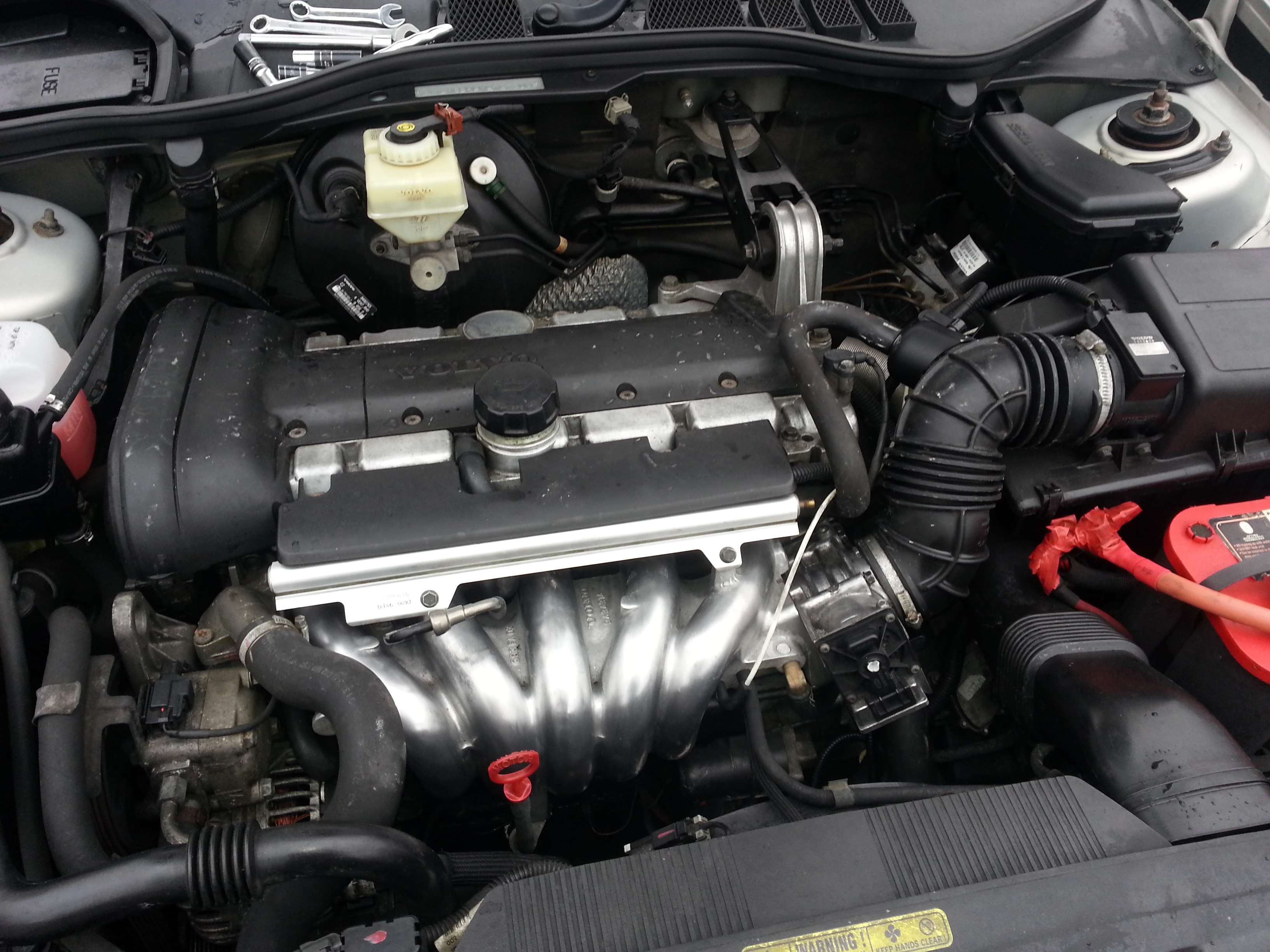
Start by taking the cover off to gain acces to the coil packs as you will need to remove the top hose from the PCV system later on, at the same time remove the plastic cover from the fuel rail:
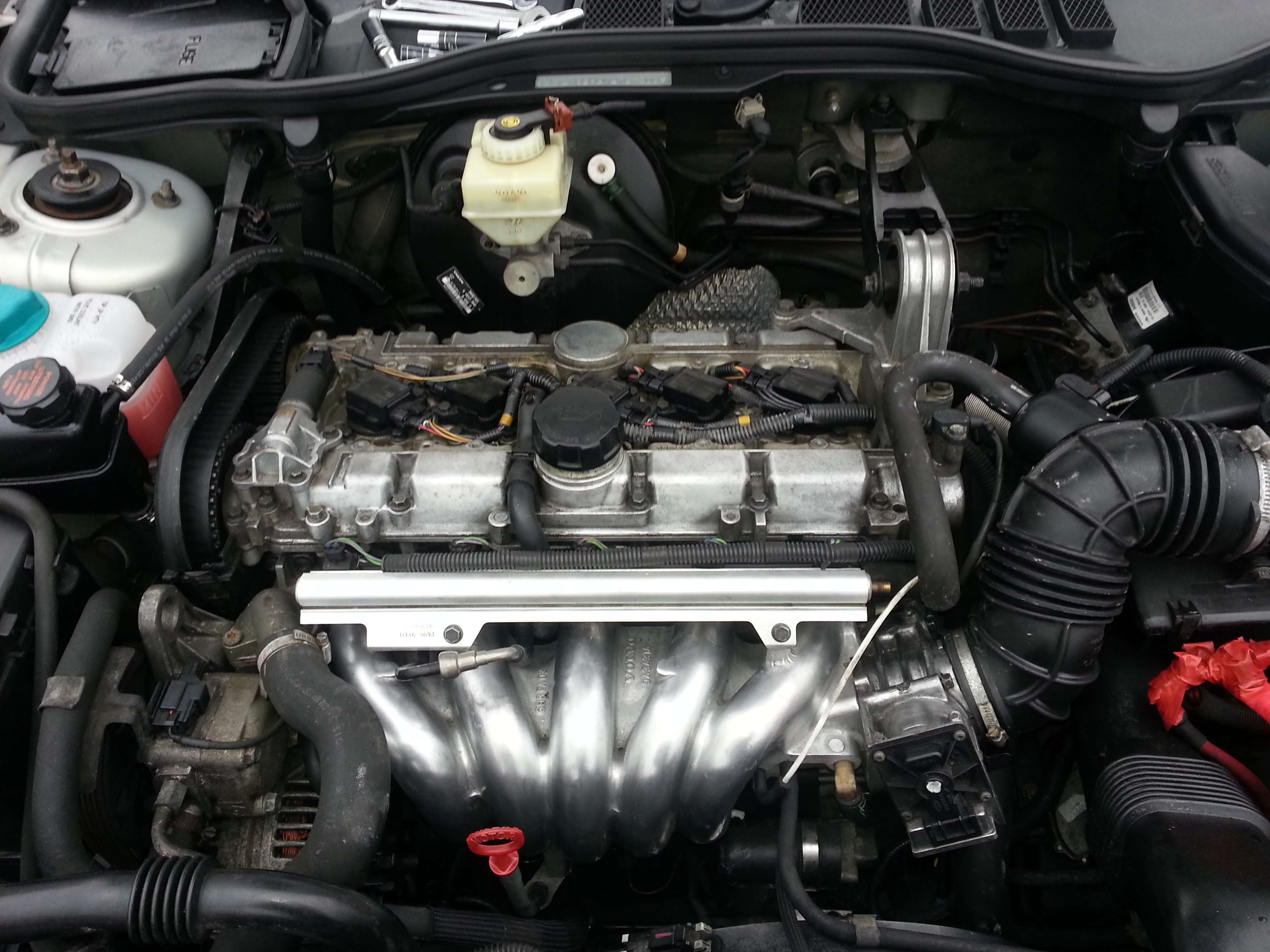
Take off the inlet pipe running between the mass airflow sensor and the electronic throttle motor, there are a couple of other pipes connected to this that need disconnecting and an electrical connector but the pipe should come away leaving the engine looking like this:

Next to come off is the Electronic Throttle Motor, four 10MM headed bolts will release it from the inlet manifold but the cable is trapped between the starter motor and the engine block so secure it somewhere safe within the engine bay, take the oppertunity to clean it out on both sides of the butterfly valve with carb cleaner while it is away from the engine

Disconnect the wiring from the injectors and put the loom out of the way, no need to number the plugs as it is obvious what goes where assuming the conduit is still in one piece:

Disconnect all the Vacuum lines from the inlet manifold:

Put some cloth or kitchen roll around the valve on the end of the fuel rail and depress the valve in the center of the schrader valve, fuel will escape but you need to depressurise the fuel system before taking the injector rail to bits, once no more fuel is escaping throw the fuel soaked rag in the bin:

Remove the two 10MM head bolts securing the fuel rail to the inlet manifold and the pull the fuel rail complete with the injectors away from the engine, take care at this point as the fuel delivery pipe is still attached to the fuel rail:

Invert the fuel rail to reveal the three Torx head screws securing the clamp plate which locks the fuel injectors and fuel delivery pipe to the fuel rail:

Remove two of three screws and release the third screw to let the clamp plate slide out to the side, try not to knock any of the injectors at this point, once the securing clamp plate is clear of the fuel delivery pipe simply pull the pipe from the fuel rail:

With the fuel rail disconnected from the delivery pipe remove it from the engine bay and put it somewhere safe, as a tip slide the clamp plate back in to place and put the two Torx head screws back in to avoid the injectors falling out, this also keeps the two screws safe from getting lost:

Obviously the above was about removing the fuel rail and injectors in one complete assembly, you can do the same to take the fuel rail to the workshop where further stripping down can be carried out, once the three torx screws securing the retaining plate are removed the injectors can be pulled from the fuel rail to change the seals - Mike
This is a quick set of pictures showing how to get to the PCV on the V70/ early S80 with the Denso engine management system without a Turbo, the engine should appear thus:

Start by taking the cover off to gain acces to the coil packs as you will need to remove the top hose from the PCV system later on, at the same time remove the plastic cover from the fuel rail:

Take off the inlet pipe running between the mass airflow sensor and the electronic throttle motor, there are a couple of other pipes connected to this that need disconnecting and an electrical connector but the pipe should come away leaving the engine looking like this:

Next to come off is the Electronic Throttle Motor, four 10MM headed bolts will release it from the inlet manifold but the cable is trapped between the starter motor and the engine block so secure it somewhere safe within the engine bay, take the oppertunity to clean it out on both sides of the butterfly valve with carb cleaner while it is away from the engine

Disconnect the wiring from the injectors and put the loom out of the way, no need to number the plugs as it is obvious what goes where assuming the conduit is still in one piece:

Disconnect all the Vacuum lines from the inlet manifold:

Put some cloth or kitchen roll around the valve on the end of the fuel rail and depress the valve in the center of the schrader valve, fuel will escape but you need to depressurise the fuel system before taking the injector rail to bits, once no more fuel is escaping throw the fuel soaked rag in the bin:

Remove the two 10MM head bolts securing the fuel rail to the inlet manifold and the pull the fuel rail complete with the injectors away from the engine, take care at this point as the fuel delivery pipe is still attached to the fuel rail:

Invert the fuel rail to reveal the three Torx head screws securing the clamp plate which locks the fuel injectors and fuel delivery pipe to the fuel rail:

Remove two of three screws and release the third screw to let the clamp plate slide out to the side, try not to knock any of the injectors at this point, once the securing clamp plate is clear of the fuel delivery pipe simply pull the pipe from the fuel rail:

With the fuel rail disconnected from the delivery pipe remove it from the engine bay and put it somewhere safe, as a tip slide the clamp plate back in to place and put the two Torx head screws back in to avoid the injectors falling out, this also keeps the two screws safe from getting lost:

Obviously the above was about removing the fuel rail and injectors in one complete assembly, you can do the same to take the fuel rail to the workshop where further stripping down can be carried out, once the three torx screws securing the retaining plate are removed the injectors can be pulled from the fuel rail to change the seals - Mike
-
- Similar Topics
- Replies
- Views
- Last post
-
- 4 Replies
- 1478 Views
-
Last post by joelq
-
- 12 Replies
- 5655 Views
-
Last post by difflock54
-
- 3 Replies
- 1048 Views
-
Last post by abscate
-
- 7 Replies
- 2020 Views
-
Last post by harrelldodd
-
- 7 Replies
- 2308 Views
-
Last post by 850TurboTurtle