I am new to this great forum, not as reader, but as poster.
My native language is Dutch.
So please forgive me any spelling mistakes.
We own two 850's: a 855 10V from '96 and a 20V LH3.2 854 from '93.
All the maintenance I do myselve.
B.t.w. I am a fanatic member of the Dutch Volvo 850 forum.
If you use a good translantion program, you can folow the history of my, and my wifes car here:
http://www.volvo850forum.nl/index.php/t ... 665.0.html
I enjoy these cars immensely. But there was one thing that surprised me.
In lower revs the 10V (140bhp) is faster than our 20V (168bhp).
Ehh serously faster. I am not sure if the 10V ever has been sold outside Europe, but that doesn't matter. The 20V is just lacking power in low revs.
The 20V non turbo models had a variable inlet manifold, to increase engine efficciency. Well this topic is all about the control of this manifold and how to improve the behaveour of the engine.
OK you will reach not more bhp's but much better behaveour and performance in low revs.
Let me explain:
While reading the original design documents, I arrived at something interesting about VVIS (Volvo Variable Induction System). Please read carefully:
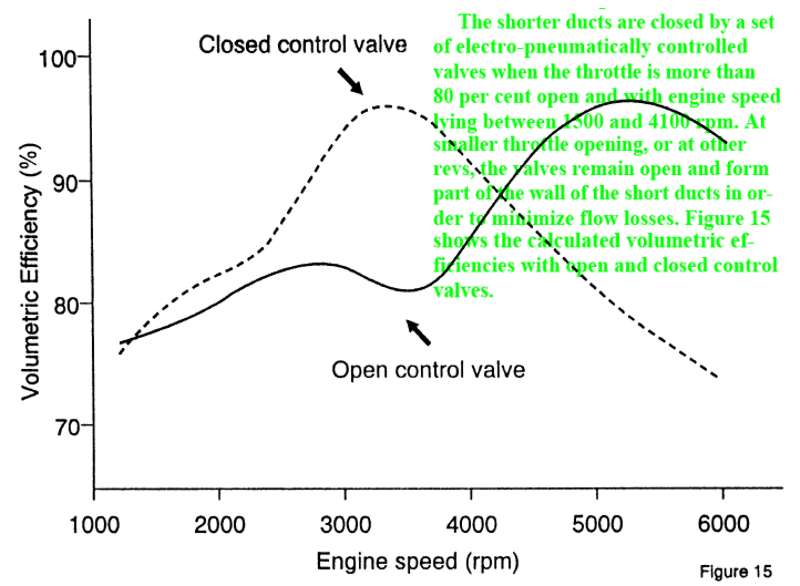
Reading this, I realised that, with no full throttle, both of the inlet manifold channels are allways open.
Simply said. The maximum available torque at a certain rev of the engine is only available above 4100rpm, or with more than 80% throttle opening.
Seemed like a bad design to me. I am used to re-engeneering, so time to work
 .
.Normally in low revs, both inlet manifold channels are open.
Not an ideal situation. In low revs, you want a high speed of the intake air. So I decided to design some overrule of the standard control of the ECU.
My decision: Under 4100rpm just one channel open. Above two. And yes a big improvement. Finally a 20V that is giving it's power alle the time.
So there is a possibility to do some N/A tuning. Don't expact miracles. Simply not possibele without $'s.
Time for some pics.
Prototype:
First expiriment
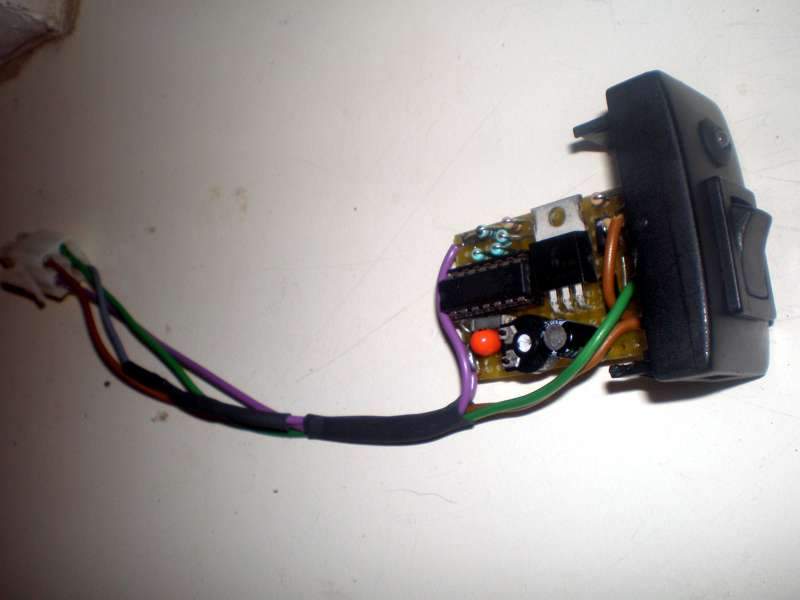
This is more than a year ago, I continued testing on diffirent engines:
20V 2.0L (mostly Italian)
AT and MT
LPG, OMVL, Vialle
LPi (Liquid gas injection (Vialle))
e.t.c.
Yeah, after a year of testing on multiple engine variations I can conclude that it makes a serous diffirence.
On turbo models this will be useless, but on an N/A engine it will give the engine a diffirent character.
Some more pic's
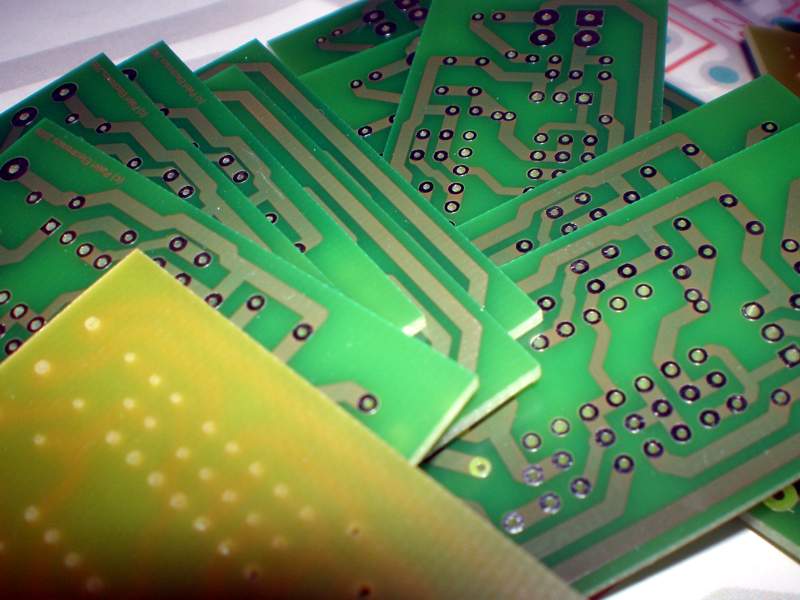
Getting serious:
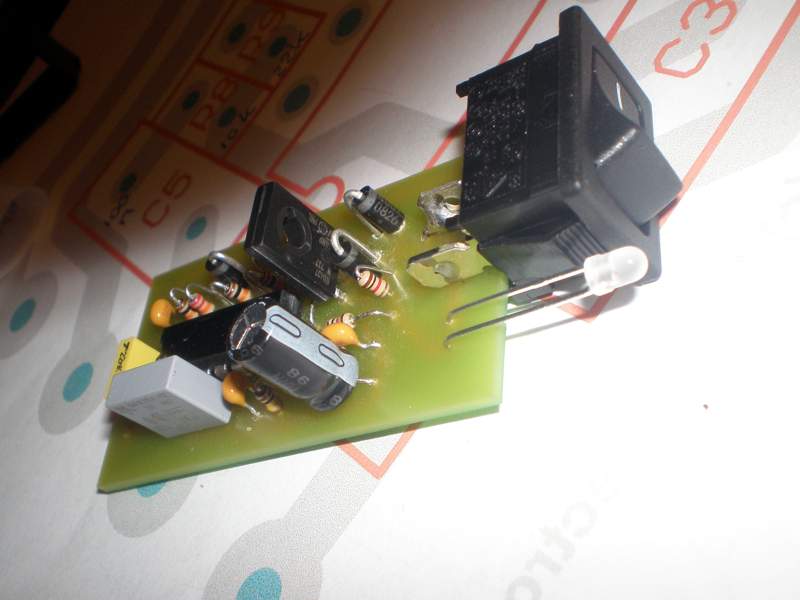
and:

Just to be sure: Not more bhp's, jus better behaveour of the engine at low rev's. But a hell of a diffirence.
There is more. You could say, Mmh (mumbling voice.. If I want full power, I give full throttle).
Yes, but you will get the full power a bit late.
First, in the original design the inlet manifold will close the short channel, than the inlet air has to reach a nice speed.
It takes about 0,3 to 0,5 seconds.
Better to have it immediately
kind regards,
Y.