


2001 Volvo S40 Stalled out and now won't start
-
ambermic83
- Posts: 22
- Joined: 13 Jun 2018, 13:00
- Year and Model: 2001 S40
- Location: Michigan
- Has thanked: 2 times
Ok so I found the relays, I have an analog ohm reader, what should it read if it is set at the Rx10 setting? When I touched the probes to the connecters it went to 6, so I am assuming 60ohms? Is that low or is that good?
-
ambermic83
- Posts: 22
- Joined: 13 Jun 2018, 13:00
- Year and Model: 2001 S40
- Location: Michigan
- Has thanked: 2 times
Ok so I found the relays, I have an analog ohm reader, what should it read if it is set at the Rx10 setting? When I touched the probes to the connecters it went to 6, so I am assuming 60ohms? Is that low or is that good?
-
emtor
- Posts: 30
- Joined: 23 Jan 2017, 01:35
- Year and Model: 2002 V40
- Location: Norway
- Been thanked: 1 time
6 at RX10= 60 ohms. If this is good or bad I don't know.
Regarding the error code that won't go away after replacing crank and cam sensors . . . this error code can be generated by extended cranking.
So, if you cranked the engine for extended periods before replacing those sensors the code in question may still be present. Were the error codes deleted after replacing these parts?
Camshaft wiring: What this person meant was camshaft sensor wiring. A loose connection would cause the error code to be set, also if the wiring is too close to the ignition coil(s) or spark plug wire. Pull the contact and put it back on a few times. Visually inspect the wiring for damage etc.
How low on gas were you when this happened? If the fuel pump runs dry it will be short lived, but since you can hear the pump hum when you turn on the ignition this is not likely to be the problem.
The best you can do is to get hold of a fuel pump relay that works. Of course, it is possible to jump the relevant contact points in the fuel relay's socket and see if the engine starts but this require that you know which contact points to jump.
Don't give up trying to find the fault. It's neither magic nor rocket science and Volvos aren't the curse of the automotive industry.
By being methodical any fault will be found.
In order to make it easier for members to help track down the fault please tell us what engine you have.
Regarding the error code that won't go away after replacing crank and cam sensors . . . this error code can be generated by extended cranking.
So, if you cranked the engine for extended periods before replacing those sensors the code in question may still be present. Were the error codes deleted after replacing these parts?
Camshaft wiring: What this person meant was camshaft sensor wiring. A loose connection would cause the error code to be set, also if the wiring is too close to the ignition coil(s) or spark plug wire. Pull the contact and put it back on a few times. Visually inspect the wiring for damage etc.
How low on gas were you when this happened? If the fuel pump runs dry it will be short lived, but since you can hear the pump hum when you turn on the ignition this is not likely to be the problem.
The best you can do is to get hold of a fuel pump relay that works. Of course, it is possible to jump the relevant contact points in the fuel relay's socket and see if the engine starts but this require that you know which contact points to jump.
Don't give up trying to find the fault. It's neither magic nor rocket science and Volvos aren't the curse of the automotive industry.
By being methodical any fault will be found.
In order to make it easier for members to help track down the fault please tell us what engine you have.
-
alschnertz

- Posts: 701
- Joined: 29 Apr 2011, 09:25
- Year and Model: 1995 854T
- Location: Connecticut
- Has thanked: 2 times
- Been thanked: 12 times
If it were me, I would check the fuel pressure at the fuel rail before wasting more time looking for a fuse.
Besides, simply confirming that the fuel pump is getting power will not guarantee that you have proper fuel pressure.
BTW, the fuel pressure should be around 44 psi at the rail.
Besides, simply confirming that the fuel pump is getting power will not guarantee that you have proper fuel pressure.
BTW, the fuel pressure should be around 44 psi at the rail.
'60 PV544, '68 220, '70 145S, '86 745T, '95 854T, '01 S40
'84 Prelude
'06 MPV
'13 Ford Focus SE
'84 Prelude
'06 MPV
'13 Ford Focus SE
-
ambermic83
- Posts: 22
- Joined: 13 Jun 2018, 13:00
- Year and Model: 2001 S40
- Location: Michigan
- Has thanked: 2 times
It is a 4-cylinder turbocharged engine according to my manual. We cranked the engine a couple times after it stalled and would not start, got a code reader a few days later and checked the engine codes. I replaced the camshaft and crankshaft sensors as that is what code it was throwing, I started with the cheaper of the two, code still stayed and car would not start, then I got the camshaft which was the more expensive one, still would not start but the code cleared. The only code that stayed was the low range performance code The gas was really low, the light had been on for days, the first thing I was going to do that morning was hit the gas station. When it stalled I grabbed a can went to the station and brought it back, still would not start. When those two sensors did not clear it, my husband thought it was a fuel problem so we went ahead and replaced the Fuel Pressure Regulator, still nothing. I have someone who is good with cars coming out tomorrow to see if he can diagnose what the issue is, he knows alot about wiring so he said he would check what everyone was suggesting.emtor wrote: 15 Jun 2018, 00:20 6 at RX10= 60 ohms. If this is good or bad I don't know.
Regarding the error code that won't go away after replacing crank and cam sensors . . . this error code can be generated by extended cranking.
So, if you cranked the engine for extended periods before replacing those sensors the code in question may still be present. Were the error codes deleted after replacing these parts?
Camshaft wiring: What this person meant was camshaft sensor wiring. A loose connection would cause the error code to be set, also if the wiring is too close to the ignition coil(s) or spark plug wire. Pull the contact and put it back on a few times. Visually inspect the wiring for damage etc.
How low on gas were you when this happened? If the fuel pump runs dry it will be short lived, but since you can hear the pump hum when you turn on the ignition this is not likely to be the problem.
The best you can do is to get hold of a fuel pump relay that works. Of course, it is possible to jump the relevant contact points in the fuel relay's socket and see if the engine starts but this require that you know which contact points to jump.
Don't give up trying to find the fault. It's neither magic nor rocket science and Volvos aren't the curse of the automotive industry.
By being methodical any fault will be found.
In order to make it easier for members to help track down the fault please tell us what engine you have.
-
ambermic83
- Posts: 22
- Joined: 13 Jun 2018, 13:00
- Year and Model: 2001 S40
- Location: Michigan
- Has thanked: 2 times
We just replaced the FPR, I thought that was the issue too, only thing we have not done is get a new fuel filter.alschnertz wrote: 15 Jun 2018, 04:01 If it were me, I would check the fuel pressure at the fuel rail before wasting more time looking for a fuse.
Besides, simply confirming that the fuel pump is getting power will not guarantee that you have proper fuel pressure.
BTW, the fuel pressure should be around 44 psi at the rail.
-
emtor
- Posts: 30
- Joined: 23 Jan 2017, 01:35
- Year and Model: 2002 V40
- Location: Norway
- Been thanked: 1 time
Don't throw any more parts on it.
Before you even think about buying a new fuel filter establish once and for all whether you have the correct fuel pressure or not.
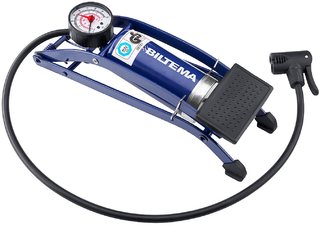
Buy a cheap foot pump at Walmart, I'm sure they sell those. See pic below:
Unscrew the manometer and hose and discard the rest. -Then do like in the pic below using a piece of fuel line and a suitable bolt.
The idea is to block off the coupling that normally would be attached to the footpump's hydraulic cylinder.
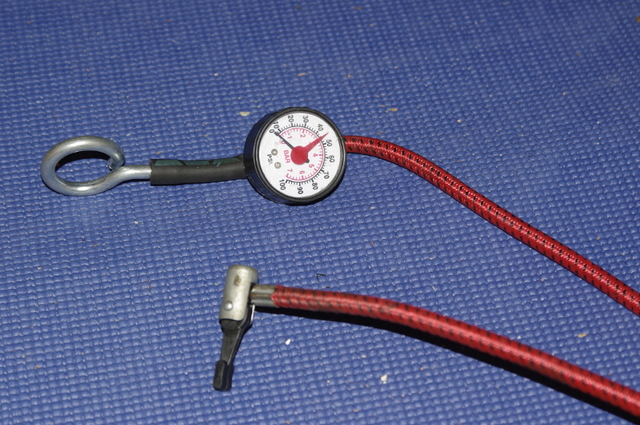
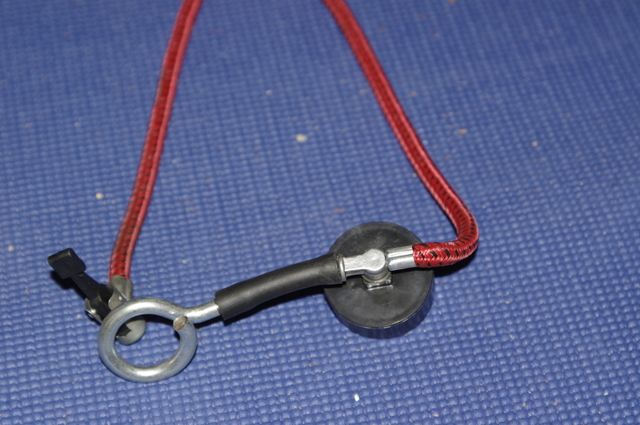
Now you can test the fuel pressure by hooking it up to the valve on the fuel rail. It should measure 44 psi or thereabouts.
If the pressure is reasonably within spec. - don't worry about a fuel problem . . . ever.
Next step then is to solve the trouble code issue.
Post a pic showing the cam sensor wires and how they're located in relation to the ignition coil(s) spark plug cable(s).
Before you even think about buying a new fuel filter establish once and for all whether you have the correct fuel pressure or not.
Buy a cheap foot pump at Walmart, I'm sure they sell those. See pic below:
Unscrew the manometer and hose and discard the rest. -Then do like in the pic below using a piece of fuel line and a suitable bolt.
The idea is to block off the coupling that normally would be attached to the footpump's hydraulic cylinder.
Now you can test the fuel pressure by hooking it up to the valve on the fuel rail. It should measure 44 psi or thereabouts.
If the pressure is reasonably within spec. - don't worry about a fuel problem . . . ever.
Next step then is to solve the trouble code issue.
Post a pic showing the cam sensor wires and how they're located in relation to the ignition coil(s) spark plug cable(s).
-
ambermic83
- Posts: 22
- Joined: 13 Jun 2018, 13:00
- Year and Model: 2001 S40
- Location: Michigan
- Has thanked: 2 times
Oh there is gas, pressed the schrader valve got a face full. My neighbor actually just took out all the sparks plugs and they were black and smelled like gas, he thinks I may have flooded them, so I currently trying to let the gas evaporate and cleaning off the plugs (new only about 1,000 miles on them). I will go post a photo of the camshaft harness where it plugs into for you to see, I did notice one thing on it I was unsure about, be back with those photos soon!emtor wrote: 15 Jun 2018, 11:54 Don't throw any more parts on it.
Before you even think about buying a new fuel filter establish once and for all whether you have the correct fuel pressure or not.
Buy a cheap foot pump at Walmart, I'm sure they sell those. See pic below:
Unscrew the manometer and hose and discard the rest. -Then do like in the pic below using a piece of fuel line and a suitable bolt.
The idea is to block off the coupling that normally would be attached to the footpump's hydraulic cylinder.
Now you can test the fuel pressure by hooking it up to the valve on the fuel rail. It should measure 44 psi or thereabouts.
If the pressure is reasonably within spec. - don't worry about a fuel problem . . . ever.
Next step then is to solve the trouble code issue.
Post a pic showing the cam sensor wires and how they're located in relation to the ignition coil(s) spark plug cable(s).
-
ambermic83
- Posts: 22
- Joined: 13 Jun 2018, 13:00
- Year and Model: 2001 S40
- Location: Michigan
- Has thanked: 2 times
So the cam wiring I detangled from the engine when I replaced it but it plugs at the top of of the hood and then I took photos of the speak plugs and coils the wire for camshaft is not near them anymore. Hoping o just flooded the plugs and doing what my neighbor has suggested will clear it out.emtor wrote: 15 Jun 2018, 11:54 Don't throw any more parts on it.
Before you even think about buying a new fuel filter establish once and for all whether you have the correct fuel pressure or not.
Buy a cheap foot pump at Walmart, I'm sure they sell those. See pic below:
Unscrew the manometer and hose and discard the rest. -Then do like in the pic below using a piece of fuel line and a suitable bolt.
The idea is to block off the coupling that normally would be attached to the footpump's hydraulic cylinder.
Now you can test the fuel pressure by hooking it up to the valve on the fuel rail. It should measure 44 psi or thereabouts.
If the pressure is reasonably within spec. - don't worry about a fuel problem . . . ever.
Next step then is to solve the trouble code issue.
Post a pic showing the cam sensor wires and how they're located in relation to the ignition coil(s) spark plug cable(s).
- Attachments
-
-
-
-
emtor
- Posts: 30
- Joined: 23 Jan 2017, 01:35
- Year and Model: 2002 V40
- Location: Norway
- Been thanked: 1 time
The wiring for the cam sensor seems OK and away from the ignition system.
Yes, extended cranking will wet the spark plugs and wash the cylinders free from oil.
If that happens the compression will be low or lost completely and the engine won't start.
If the starter motor goes high speed and runs effortlessly this is what has happened, but even if the cylinders aren't being washed clean of oil wet spark plugs will be enough to give you starting problems.
With the plugs out, put the gas pedal to the floor and turn the key and crank the engine.
By depressing the pedal fully the fuel injectors will shut off and the cranking will blow the gas out of the cylinders.
If it still won't start after drying up you should investigate that error code further.
Usually this involves replacing the cam and crank sensors, but since you've already done this perhaps checking the cam sensor contacts and wiring harness is an option. The cam sensor is connected to the control unit with three wires (Fenix and ECM 2000 systems), so checking for continuity between the sensor and the control unit is a must since a bad connection here will make starting impossible.
Yes, extended cranking will wet the spark plugs and wash the cylinders free from oil.
If that happens the compression will be low or lost completely and the engine won't start.
If the starter motor goes high speed and runs effortlessly this is what has happened, but even if the cylinders aren't being washed clean of oil wet spark plugs will be enough to give you starting problems.
With the plugs out, put the gas pedal to the floor and turn the key and crank the engine.
By depressing the pedal fully the fuel injectors will shut off and the cranking will blow the gas out of the cylinders.
If it still won't start after drying up you should investigate that error code further.
Usually this involves replacing the cam and crank sensors, but since you've already done this perhaps checking the cam sensor contacts and wiring harness is an option. The cam sensor is connected to the control unit with three wires (Fenix and ECM 2000 systems), so checking for continuity between the sensor and the control unit is a must since a bad connection here will make starting impossible.
-
- Similar Topics
- Replies
- Views
- Last post