


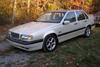
I was wondering what oil people are using in their 850 turbo's. Mine has standard oil in it from when I bought it a few weeks ago, The previous owner did not use synthetic. I have heard that changing to synthetic can cause leaks. The owners manual recommends synthetic, 10w30 for my climate. I didn't know if something was better because of the turbo's.
Anyway, what brand, and weight are people using? Thanks.
-----------------------------------------------------------------------------------
1996 850 Turbo, Platinum Edition
850 turbo oil recommendation
I use Mobil 1 1--30 in our Volvo's, which includ 91 940 SE, 93 T, 94 855T, 98 S70 GLT and 98 T5. These are all converts from Dino. The 855 did spring a leak at the RMS, but that may have been from poor maintenance by PO. Following replacement, which I did, it has no more leaks. Make sure your engine breathing system is up to date, i.e. oil trap and associated hoses for crankcase.
-
calbrit01
- Posts: 119
- Joined: 14 May 2007
- Year and Model: 94 855 Turbo
- Location: British National living in San Diego, CA.
- Been thanked: 1 time
I started using Mobil 1 High Mileage, I think its a 10-30 (California), on my 94 850 turbo. The leak I had in the crankcase went away shortly after and hasn't returned, and what I have read this is fairly common side affect of the seal conditioners in that oil.
I also only change the oil at 5000m, the recommended interval for the turbo with standard oil, so that gives me more than enough protection. Oh, I should add that I don't subscribe to this 3000m oil change nonsense in the US, just another money grabber - Swedish weather gets pretty awfull so if its good enough to have 5k for turbo there, then its fine here.
On the Mobil web site they have a really interesting video testing the Mobil 1 Extended Service product, which claims to increase to 15K changes. The test is on a Las Vegas taxi, and if you believe the results, its pretty impressive. You need the high capacity oil filter which run at around $13 (in CA), but the oil is around $30 for 6L (in CA), so overall about the same as regular oil in cost terms.
I also only change the oil at 5000m, the recommended interval for the turbo with standard oil, so that gives me more than enough protection. Oh, I should add that I don't subscribe to this 3000m oil change nonsense in the US, just another money grabber - Swedish weather gets pretty awfull so if its good enough to have 5k for turbo there, then its fine here.
On the Mobil web site they have a really interesting video testing the Mobil 1 Extended Service product, which claims to increase to 15K changes. The test is on a Las Vegas taxi, and if you believe the results, its pretty impressive. You need the high capacity oil filter which run at around $13 (in CA), but the oil is around $30 for 6L (in CA), so overall about the same as regular oil in cost terms.
94 850 Turbo wagon. Mobil 1 HM, K&N Air. 170Kmiles.
i have a '94 855t and use castrol 5w30. i heard that it is better to use a lighter weight oil if you have a turbo. i also use a bosch oil filter. when i did the first oil change in march (that's when i bought it), there were little metal shavings on the dipstick  . i don't know what weight oil the p.o. had in it, but he had a volvo filter. since i went to the bosch i haven't seen any shavings. i'm keeping my fingers crossed- i need this car to last at least two more years. i do however have a considerable ammount of oil in the intercooler hoses. i think it may be the turbo leaking oil through to the intake.
any input?
thanks,
mike
. i don't know what weight oil the p.o. had in it, but he had a volvo filter. since i went to the bosch i haven't seen any shavings. i'm keeping my fingers crossed- i need this car to last at least two more years. i do however have a considerable ammount of oil in the intercooler hoses. i think it may be the turbo leaking oil through to the intake.any input?
thanks,
mike
'94 850 turbo wagon 285k mi. (ipd chipped ecu; aluminum skid plate; bitchin' stereo; new heater core/t-stat/hoses; sport exhaust; strut brace; turbo vac/boost gauge; k&n air filter; pcv, vacuum hoses replaced)
'93 ford ranger 2.3l 309k mi.
'93 ford ranger 2.3l 309k mi.
-
redbrick
- Posts: 74
- Joined: 6 February 2007
- Year and Model: 2005 V50 T5 AWD
- Location: Spencerport, NY
It would be nice to hear one of our oil guru's comment about these "seal conditioners." To me, this is pretty scary sounding stuff. How does it work, by disolving the seals? My son put a high mileage oil (fossil) in an older Audi and it started leaking from places that I did not even know it had. It was a total disaster.calbrit01 wrote:I started using Mobil 1 High Mileage,The leak I had in the crankcase went away shortly after I have read this is fairly common side affect of the seal conditioners in that oil.

94 - 940
97 - 850 T5
99 - V70 GLT
05 - V50 AWD T5
97 - 850 T5
99 - V70 GLT
05 - V50 AWD T5
It's good to use synthetic in any engine, but extremely important in a turbo.
I use Castrol synthetic 5w50 in all my cars all year round. Switched to Castrol about 10 years ago after Mobile 1 destroyed an engine. You may get some leaks with 5w30. On high mileage cars I use Castrol 20w50 synthetic.
I use Castrol synthetic 5w50 in all my cars all year round. Switched to Castrol about 10 years ago after Mobile 1 destroyed an engine. You may get some leaks with 5w30. On high mileage cars I use Castrol 20w50 synthetic.
waynej
99 S70
96 854
87 245 wife's car
94 850 sons car
94 850 2nd sons car
Previous Volvos
93 850
87 744
85 244
82 244
80 244
78 244
78 245
76 265
71 P1800
71 142
99 S70
96 854
87 245 wife's car
94 850 sons car
94 850 2nd sons car
Previous Volvos
93 850
87 744
85 244
82 244
80 244
78 244
78 245
76 265
71 P1800
71 142
-
calbrit01
- Posts: 119
- Joined: 14 May 2007
- Year and Model: 94 855 Turbo
- Location: British National living in San Diego, CA.
- Been thanked: 1 time
I pulled the section below from an independent article at: http://www.upmpg.com/tech_articles/motoroil_viscosity/
Interesting to note which manufactures actually make a "true" synthetic oil, rather than one labeled synthetic through a legal loophole.
Seal conditioners appear to refer to seal swell. Presumably the true synthetics as noted below, are probably better at swelling the seals, hence providing a tighter seal.
I would be interested to hear more about "Mobil 1 destroying an engine"
From what I understand, viscosity rating should be chosen on factors such as local temperature variances, the "w" in being the low temperature range and affect on viscosity, and the non (higher) number being the higher operating temperature viscosity, which I expect will include local conditions and engine performance i.e turbo over normally aspirated. Here in southern california 10w-30 is generally recommended and widely available as seems to be in this article in general. Different areas may have difference recommendations - Idaho for instance gets a lot colder in Winter than SoCal.
Point of fact from my owners manual:
"Stable ambient temps (outside)
upto 68F SAE 5W/30
upto 104F 5W/40
-4F - 104F 10W/30
down to approx 9F 15W/40
15W/40 reccomended for conditions that increase engine temp i.e trailer towing. mountain driving. Should not be used in low ambient temps (as above)
I don't quite see how mileage and viscosity go together - I look forward to being enlightened though!
ARTICLE SECTION:
"Group IV and Group V base oil (synthetics) are chemically made from uniform molecules with no paraffin and don't need Viscosity Additives. However, in recent years Group III base oils have been labeled "synthetic" through a legal loophole. These are petroleum based Group II oils that have had the sulfur refined out making them more pure and longer lasting. Group III "synthetic" motor oils must employ Viscosity Additives being petroleum based.
Group V based synthetics are usually not compatible with petroleum or petroleum fuels and have poor seal swell. These are used for air compressors, hydraulics, etc. It's the Group IV PAO based synthetics that make the best motor oils. They are compatible with petroleum based oils and fuels plus they have better seal swell than petroleum. Typically PAO based motor oils use no Viscosity Additives yet pass the multi-grade viscosity requirements as a straight weight! This makes them ideal under a greater temperature range. One advantage of not having to employ Viscosity Improving additives is having a more pure undiluted lubricant that can be loaded with more longevity additives to keep the oil cleaner longer.
How do I know what motor oil is a Group IV based PAO synthetic motor oil?
As more and more large oil companies switched their "synthetic" motor oils to the less expensive/more profitable Group III base stocks it has become much easier to identify which are PAO based true synthetic. Of the large oil companies, only Mobil 1, as of this writing, is still a PAO based true synthetic. The rest, including Castrol Syntec, have switched to the cheaper/more profitable Group III petroleum based "synthetic" motor oil. AMSOIL Synthetic Motor Oils are PAO based true synthetic motor oils with the exception of the short oil drain XL-7500 synthetic motor oils sold at some Auto Parts Stores and Quick Oil Change Centers. This leaves more than 20 PAO based true synthetic motor oils manufactured and marketed by AMSOIL with only 4 Group III based synthetic motor oils identified by the "XL-7500" product name."
Interesting to note which manufactures actually make a "true" synthetic oil, rather than one labeled synthetic through a legal loophole.
Seal conditioners appear to refer to seal swell. Presumably the true synthetics as noted below, are probably better at swelling the seals, hence providing a tighter seal.
I would be interested to hear more about "Mobil 1 destroying an engine"
From what I understand, viscosity rating should be chosen on factors such as local temperature variances, the "w" in being the low temperature range and affect on viscosity, and the non (higher) number being the higher operating temperature viscosity, which I expect will include local conditions and engine performance i.e turbo over normally aspirated. Here in southern california 10w-30 is generally recommended and widely available as seems to be in this article in general. Different areas may have difference recommendations - Idaho for instance gets a lot colder in Winter than SoCal.
Point of fact from my owners manual:
"Stable ambient temps (outside)
upto 68F SAE 5W/30
upto 104F 5W/40
-4F - 104F 10W/30
down to approx 9F 15W/40
15W/40 reccomended for conditions that increase engine temp i.e trailer towing. mountain driving. Should not be used in low ambient temps (as above)
I don't quite see how mileage and viscosity go together - I look forward to being enlightened though!
ARTICLE SECTION:
"Group IV and Group V base oil (synthetics) are chemically made from uniform molecules with no paraffin and don't need Viscosity Additives. However, in recent years Group III base oils have been labeled "synthetic" through a legal loophole. These are petroleum based Group II oils that have had the sulfur refined out making them more pure and longer lasting. Group III "synthetic" motor oils must employ Viscosity Additives being petroleum based.
Group V based synthetics are usually not compatible with petroleum or petroleum fuels and have poor seal swell. These are used for air compressors, hydraulics, etc. It's the Group IV PAO based synthetics that make the best motor oils. They are compatible with petroleum based oils and fuels plus they have better seal swell than petroleum. Typically PAO based motor oils use no Viscosity Additives yet pass the multi-grade viscosity requirements as a straight weight! This makes them ideal under a greater temperature range. One advantage of not having to employ Viscosity Improving additives is having a more pure undiluted lubricant that can be loaded with more longevity additives to keep the oil cleaner longer.
How do I know what motor oil is a Group IV based PAO synthetic motor oil?
As more and more large oil companies switched their "synthetic" motor oils to the less expensive/more profitable Group III base stocks it has become much easier to identify which are PAO based true synthetic. Of the large oil companies, only Mobil 1, as of this writing, is still a PAO based true synthetic. The rest, including Castrol Syntec, have switched to the cheaper/more profitable Group III petroleum based "synthetic" motor oil. AMSOIL Synthetic Motor Oils are PAO based true synthetic motor oils with the exception of the short oil drain XL-7500 synthetic motor oils sold at some Auto Parts Stores and Quick Oil Change Centers. This leaves more than 20 PAO based true synthetic motor oils manufactured and marketed by AMSOIL with only 4 Group III based synthetic motor oils identified by the "XL-7500" product name."
94 850 Turbo wagon. Mobil 1 HM, K&N Air. 170Kmiles.
-
Reys
- Posts: 67
- Joined: 7 October 2009
- Year and Model: 850T estate '96
- Location: British Columbia, Canada
I live in Southwestern British Columbia Canada and our temperatures range from 14º F in the winters to 86º F tops in the summer. I believe my 97 850 T5 with close to 167,770miles has non synthetic oil in it. The high mileage does show signs of leaking in the intercooler pipes and little traces around the crankcase etc. Would switching over to a quality synthetic improve the leaking or worsen it? and would it benefit the turbo to make the conversion worth while? What is the viscosity, weight, and oil best suited for a 97 850 T5 in Southern Canada with high mileage?
-
9394volvo850s
- Posts: 239
- Joined: 12 October 2009
- Year and Model: 93 850 5spd 94 850T5
- Location: New York
i have been using Valvoline 10W30 synthetic in both my non turbo and turbo 850s. hey it has a 300k mile warrantee if used before 75K. who else can do that?? 169K on the turbo 256K on the non turbo.
93 850 5spd 320k (the daily)
94 850 T5 190K (race car)
95 T-5R wagon yellow (summer wag)
90 745 5spd 295k (winter wag)
67 122 2 door 4spd 69k )
)
94 850 T5 190K (race car)
95 T-5R wagon yellow (summer wag)
90 745 5spd 295k (winter wag)
67 122 2 door 4spd 69k
)-
mindshadow
- Posts: 257
- Joined: 26 May 2009
- Year and Model: none
- Location: Birmingham
Has anyone here seen the new Mobil 1 0w30 motor oil? I almost picked it up the other day but opted for the high mileage instead. I'm thinking about trying the 0w30 in my wife's Nissan to see if it destroys it or not. 
-
- Similar Topics
- Replies
- Views
- Last post