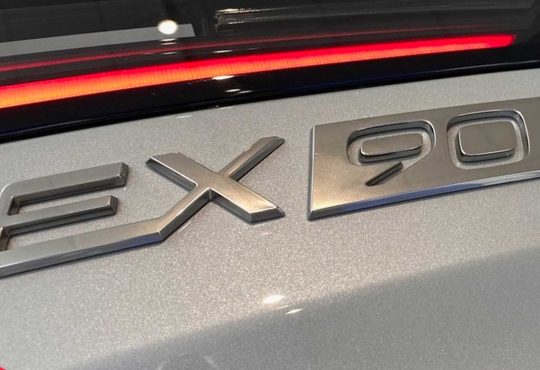
While I was researching material for this article I realized something fairly interesting. Volvo didn’t brand this goal. It wasn’t “Goal 2030,” or “The 2030 EV Promise,” or somesuch ad agency marketing nonsense. I can’t find any evidence of it, and I don’t remember this pledge as a branded marketing exercise, which is surprising because car companies usually give in to the branding urge. In retrospect, Volvo’s non-branding of their 2030 goal was wise because the doomed project’s profile isn’t as tall as it would have been if it was branded. The bigger they are, the harder they fall.
But I didn’t gather you all here today to talk about branding. If you didn’t get it via the headline, a little over two weeks ago Volvo formally abandoned their 2030 pledge to go all-EV. I mentioned this possibility in July. Where the 2030 goal was, Volvo has now swapped in “Going forward, Volvo Cars aims for 90 to 100 per cent of its global sales volume by 2030 to consist of electrified cars, meaning a mix of both fully electric and plug-in hybrid models – in essence, all cars with a cord.”
This is big news in the automotive world, but not unexpected. Examples of recent auto companies’ pivots:
- Toyota cuts 2026 EV output by 1/3
- GM cuts EV production by 50k in North America
- Ford cuts EV spending + delays/cancels some EV’s
- Honda + GM cancel plan to co-develop EV’s
- Mercedes cancels goal of all EV’s by 2030
- BMW cancels battery contract + announces hydrogen projects
Are incumbent automakers just not good at producing EVs as say Rivian and the 900-lbs gorilla Tesla? (They’re not.) Is the market somewhat EV-saturated? (It is.) The number of EVs sold each month is increasing. Don’t misunderstand that. The problem is the rate of monthly EV sales is decreasing, and that’s worrying to automakers.
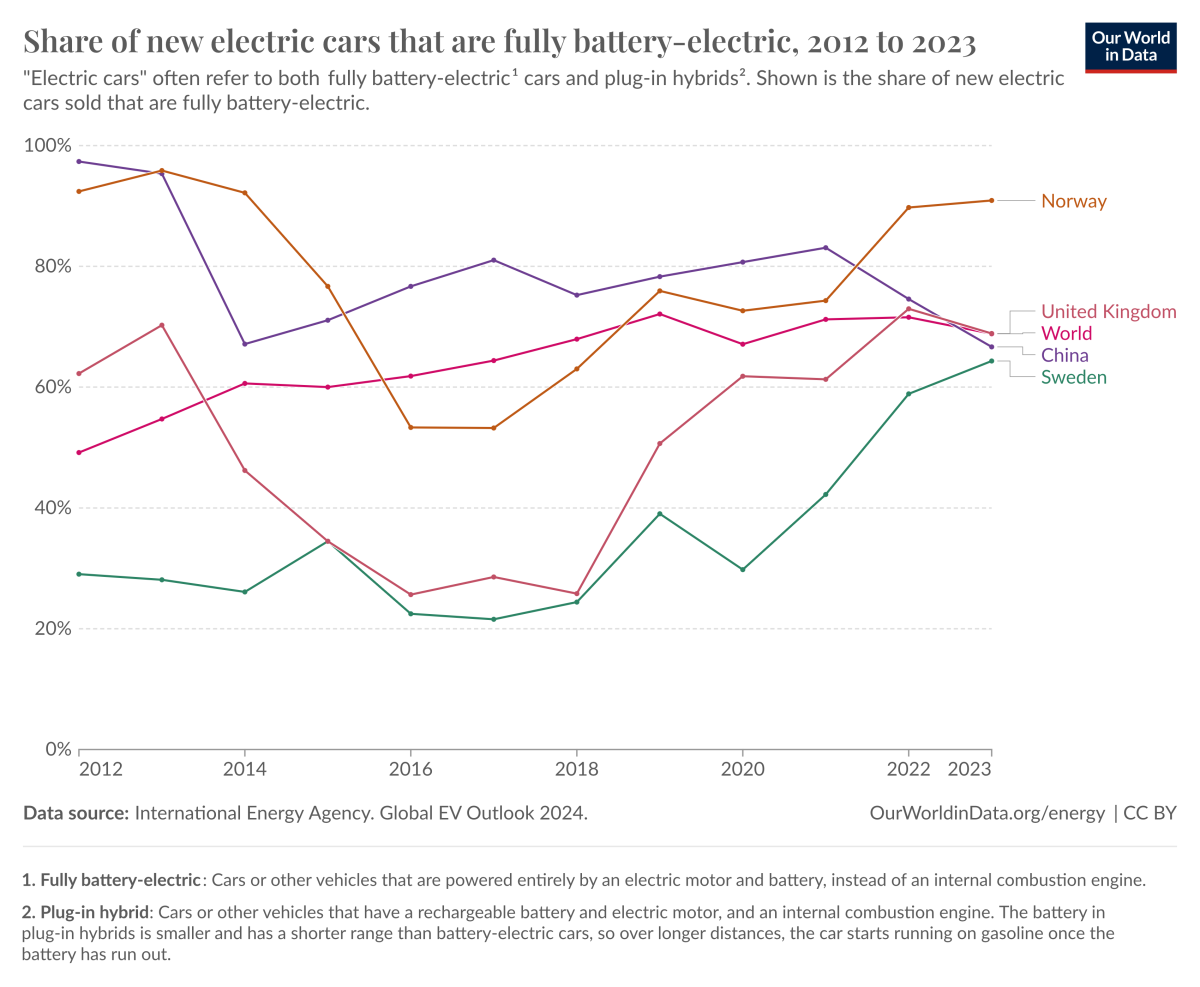
Apparently the decline in the rate of sales, accompanied by production and import problems, have combined to worry Volvo enough to give up the 2030 EV goal.