


findude »
I’m pretty sure the engine is shot. Have a look at this thread. I’m planning to do the SeaFoam and heavier oil treatment to see what happens.
The car uses a lot of oil (I’m at about 1 quart per 500 miles) and has bad compression in the #4 cylinder. There is absolutely no oil leak of any kind anywhere. I know this from a clean garage floor and from getting under the car and doing a visual inspection. The car smokes, especially after idling at a stop light.
That said, I do believe I have an O2 sensor problem as well and that it is running rich in addition to burning oil.
Two mechanics, an independent and a Volvo dealer, also told me that the car has bad rings. I was careful not to ask a leading question–I just told them that it smoked a lot, especially after idling for a while. I’m pretty much just accepting that my engine is the exception that makes the rule. They both explicitly stated there was no PCV problem, and the whole “oil trap” service was done at 88,000 miles.
The car has been subjected to sub-optimal use for the last several years. Mostly this is very short trips that add up to less than 4,000 miles a year. To put it in perspective, while I managed to get almost 33 miles a gallon at an average speed of 60 mph on a 300-mile road trip last weekend, the trip computer usually shows an average mpg of 21 and an average speed of 19 mph. My trip computer has always been dead on for hand-calculated mpg, so I believe it.
Blue smoke = dead? When to say goodbye to an engine.
charlyW »
To me those Compression figures say either its a case of the head gasket is on the way or the piston rings are worn but no way is the engine shot.
A shot engine I would expect compression figures in the low 100’s and not still in the 200’s. If it were me I’d take the head off drop the oil and see how much movement you have in the pistons at TDC one by one if theres 0.5 to 2mm then the rings are on the way out if its the movement is greater with clunking/clicking then piston rings have had it.
I rebuild luxury classic car engines for a living and in no way would I scrap that engine its only going to cost your a few hundred to fix and maybe a weekend to remove the engine then strip it out and a week or so to rebuild it depends on how much time you can spare.
Hone the bores till you get a nice X pattern
Check the crank is straight
Make sure the pistons are clean especially where the rings sit there must be no gloop.
Make sure if you rebuild the engine you are very very generous with the oil can[dont be afraid of using half a gallon of oil on rebuild. On a rebuild of a Rolls engine I would anticipate in using a UK gallon which is 4.54 litres] 90% of engine failure can be traced back to original lubrication on rebuild. [for information we have a 1964 Aston Martin in the shop that came in with some serious engine noise following a cheap rebuild and we have traced it back to lack of lubrication on build]
Make sure ALL oilways are free and clear the smallest bit of carbon will destroy the bearings.
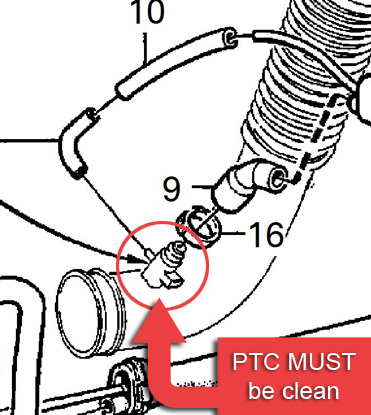
I would also say the PCV is blocked somewhere namely that pipe coming from the base of the block going into the bottom of the seperator canister.
Is this the end of my engine?Subscribe to the MVS Newsletter
The MVS Volvo Newsletter is a once-a-month email delivered to your email. It’s simple to unsubscribe at any time if you change your mind.
Last Updated on July 8, 2025


