


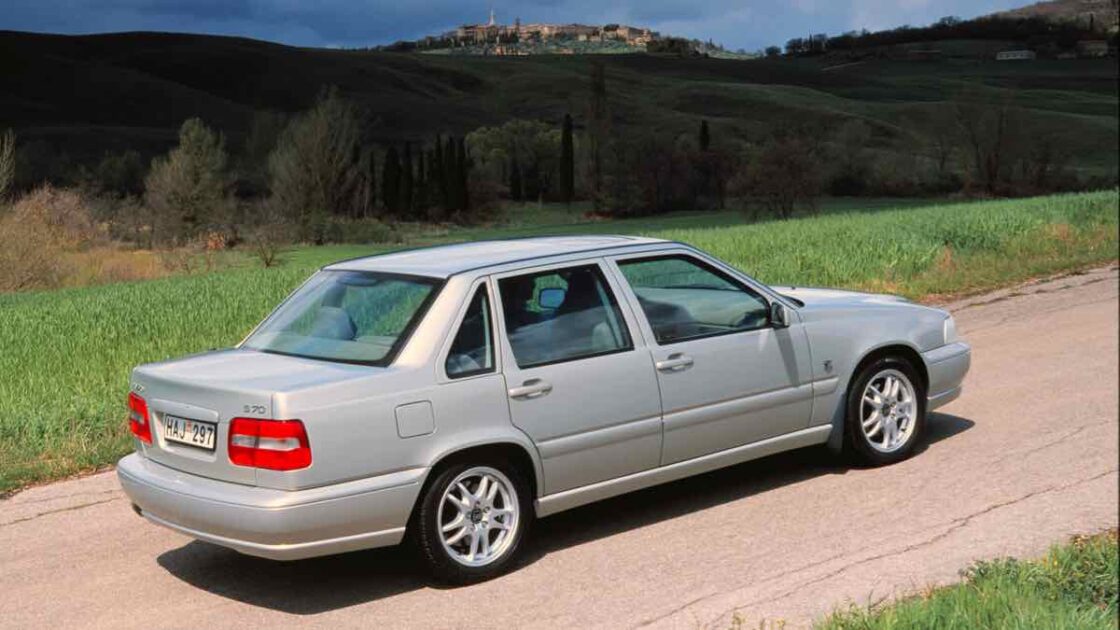
We’re all struggling with that issue (’98-’00’s) as apparently Volvo used some sort of environmental friendly glue on those panels. Even if you can pull them off, you’re going to find a deteriorated foam piece underneath. It seems the best bet it to take your panels off and to an upholstery shop and let them recover the panels with something that will fit your color schemed. I actually had an upholstery shop locally to me do this on a panel I picked up at a junk yard, last years, hoping that I could offer this service to others who have this problem, but I was not really pleased with their work.
kmesse »
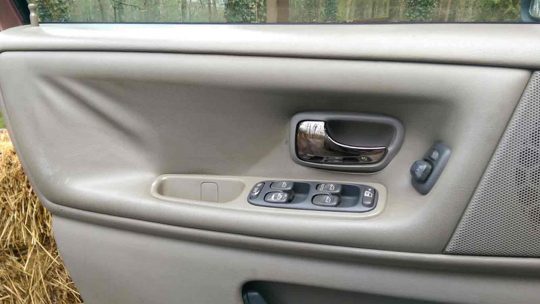
I have the puckering on every door on my 99 S70. It goes from the tangent all the way to the controls, not just a bubble. Whole thing is peeled up.
Instead of replacing the vinyl or door, I thought I could take a piece of thin plywood, cut it to tightly fit inside of the door plate, idea being it would be an extra plate that would cover the whole insde of the puckering thing. Fasten 2 bolts through it to its backside that will attach through the panel to the inside of the door. Mount new vinyl material over that wood to make it pretty, staple it to the backside. Then use a blowdryer to soften the door vinyl since it’s pretty tight, and fasten the new plate to the whole door panel to clamp the whole thing down.
Just a theory since all I’ve heard is trying to fix the vinyl. If I actually get to it, I’ll let you know how it works, and maybe make a fortune selling the new door plates.
Love the site, been living here since I bought my S70 a couple weeks ago and I’ve got lots to fix including the squeaky dash fix.
kmesse wrote:
I have the puckering on every door on my 99 S70. It goes from the tangent all the way to the controls, not just a bubble. Whole thing is peeled up.
I had a similar idea but my thought was to use a piece of Kydex that was very thin.
For those of you who don’t know, Kydex is a heat shapeable plastic sheet that comes in various thicknesses and it’s commonly used for concealed carry pistol holsters and knife sheaths. I’ve worked with it before and it’s pretty tough stuff.
Some day if I have access to a wood shop again, I’d like to make a wooden router template for all four doors of these Volvos and try making a set of Kydex inserts. The material is available in various sizes and while it’s not cheap, it would last forever and it’s very easy to work and would look nice.
The approach I would use would be to create a wooden template that would mimic the smallest flat surface profile in the door alcove from the door handle all the way back to the wide end, plate the Kydex over the template and trim it with a laminate trimmer. Then I would carefully slice away all the vynil on the door that was pulled loose and place the Kydex in there so it would pull all the remaining loose vynil tight. I’d probably attach the Kydex with spray glue and some small screws at each end that could be hidden behind a cap.
I’m sure this would work, but I just don’t have the time and resources to do it now. The idea of plywood is good, but it Kydex would probably be better as it is much thinner and weather / temperature resistant than wood.
rolymon »
Remove the door panel- theres a vid on YouTube on how to do this- fairly simple. https://www.youtube.com/embed/ayDhkXZj16A
With the panel off, pull off the metal channel that runs the length of the top of the door panel- this channel has clips that retain the felt window weather stripping and, when all is well, pinches the edge of the vinyl to the edge of the molded wood composite inner door panel. This is a patience task, will require careful use of a prying device to separate the channel from the door card by spreading the channel a bit. It can be done- promise.
Once the channel is removed remove the clips that retain the weather strip from the channel. Easiest if you first remove the weather strip from the clips and then remove the clips from the channel.
Take a pair pliers and drill bit which is JUST SLIGHTLY wider than the inside of the channel where it clips over the edge of the composite wood door card. Lay the drill bit in the channel and squeeze it in to the channel with the pliers spreading the channel open just slightly. This will facilitate reinstalling the channel over the edge of the door card once the vinyl has been reapplied.
Use a hair dryer and warm the vinyl to loosen the adhesive and pull it back from the upper edge of the door card where the channel was just removed. Have at least inch of the vinyl pulled back from the edge of the door card and at least as far as the vinyl has already separated from the card in the worse areas.
Work the vinyl by hand pulling stretching it and basically “practice” making it lay flat. The material is pretty compliant so you can stretch it or roll out wrinkles as you need to. There will be enough of the original contact glue still present allowing you to work one area at a time and see what needs stretching.
Get some 3M industrial strength spray contact adhesive. Follow the directions spraying both the surface of wood composite door card and the inside of the vinyl, allow a couple of minutes at least to become fully tacky. Don’t hurry- allow the adhesive to become good and tacky. Also, don’t buy anything short/cheaper of this specified adhesive. They will not hold the material as you need it to.
The next part is the money shot- it’s messy but don’t worry- I have a clean up remedy.
Pull and stretch the vinyl all the way to the edge of the door card where the channel was mounted. Take advantage of the “springiness” of the vinyl to manipulate the material flat on the door card surface but be sure to pull it ALL THE WAY to the edge of the door card where the channel clips on. Once set, I used a large deep well socket to as an “iron” to press the material firmly home in the adhesive. I then took a couple of paint stir sticks and clamped them to the edge of the fabric/door card until the adhesive set.
Re-mount the channel on to the edge of the door card pushing the channel over the edge of the vinyl. Be sure to press the channel completely home on the edge of the door card so it provide maximum “pinch” on the edge of the vinyl.
Take a pair of vice grips and pinch the channel tight on to the edge of the door card/edge of vinyl. Be careful not to over pinch it and be care full not to crush the little slots that the clips slide in to that retain the weather stripping. Again, be careful not to over pinch but lots and lots of individual pinches is probably best.
The adhesive is a mess but is easily cleaned up with aerosol brake clean.
Re- assemble from there same as your disassembly.
Last Updated on August 22, 2024


5 Comments
So I have a 99 same problem as everyone, I made fiberglass panels that fit into the alcove of the door. Covered them with black leather and light padding. Drilled two holes , my pads are 9 inches long each hole is 3 in from the ends and centered top to bottom. I then used long trim tabs the plastic ones with the fins used for body panels etc, drilled two holes in the door panel that were aligned in the holes with my panel that I created with the black leather. I then pushed those into the door panel through the pad securing it tightly and it tightened the sagging vinyl it worked excellent I was able to choose the color I wanted I went with black you can go with any color you choose it was very easy and very effective and cost me about $30 total
Sorry guys! Our Twitter account is of course twitter.com/wolvengang. Here you can follow new Panelpads doorpanel developments and the photo of the first 0-series Panelpads product!
Okay, V70 and S70 Classic owners overseas! We finally managed to deliver the first of the 0-series of our announced Panelpads: an easy but effective solution to loosening vinyl on the doorpanels of our beloved cars. On Twitter you can see the first kit and follow further developments:
http://Www.twitter.com/panelpads
We probably need a little more time to complete the first true production series of 60 sets. At that point we will open our shop window and we will ship overseas. We’ll keep you updated!
Message here from overseas: we are working on a sturdy but simple and inexpensive repairkit called PANELPADS to solve this problem WITHOUT having to remove the panels of your car. We found the working principle already, still working on the finishing touch, and we will ship overseas. You can get more information on:
http://www.wolvengang.com/#!commitment-english/oj5uu
Or follow this project on Twitter #panelpads.
ATTENTION! Do NOT try to glue the vinyl back on the panel in whatever way unless you are an absolute upholstery professional! It will do more harm than it will help.
The vinyl was puckering off on the interior panels on my 1998 XC70. Apparently Volvo had issued a service bulletin which my dealer failed to tell me about. I found out about it after the warranty period expired and Volvo refused to fix it. They were willing to sell me new panels though.