


If you’re looking for companies with rich history and reputation in the automobile industry, surely Volvo must find its way into the discussion. The automaker has held sway in the global automobile industry for years.
Most people consider pickups the best thing to have happened since SUVs. And in recent times, companies like Ford and GM have made enormous sums of money selling pickups. In fact, the Ford F-150 pickup has been the best-selling automobile in the US for more than 40 years.
Tesla electric pickups intend to capitalize on the market.
But Volvo, wildly successful with their SUVs, hasn’t been involved in the pickup market. And this has left industry observers wondering if Volvo will make a pickup.
Such skepticism isn’t at all far-fetched, seeing that German automobile giants have tried and failed with the Mercedes Benz X-Class. Although since 2017 — and even as recent as 2020 — there have been rumors that Volvo planned to make a Pickup truck.
So would Volvo make a pickup? Is the market ready for a Volvo pickup, and is there a market in the US or elsewhere for a Volvo pickup?
Here’s What To Expect From A Volvo Pickup If They Made One
Images on the internet show that if Volvo were to make a pickup, one of their SUVs would influence its design. As expected, the pickup’s front end may bear a similar design to their largest SUV, the XC90.
But expect the grille to look bold and enforcing with led headlights to match the look. In terms of dimension, you might be expecting specifications similar to X class or a little more.

Volvo has no confirmed reports making a pickup but expects a hybrid powertrain or fully electric powertrain. This makes sense considering that if it hopes to compete in the American market, it needs to rival Tesla’s pickup.
Under the hood, there’s a high chance you’ll find a T8 twin engine. This will come with an output of 400 horsepower and a torque of 472 lb-ft. The drivetrain could be paired with an auto 8-speed transmission and all-wheel drive.
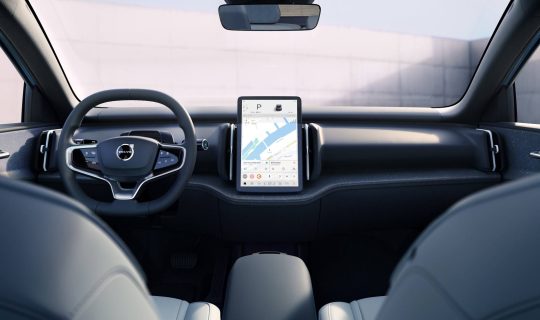
Without a doubt, you should expect the best and latest infotainment systems and entertainment… probably Android Auto, based on Volvo’s recent embrace of this system. A neat but luxurious-looking, leathered cabin should add to the feel of style and comfort of the interior.
Expect Volvo’s pickup to be capable of towing up to 5,000 pounds. And all of this definitely won’t come cheaper than $50,000.
Is The Market Ready For A Volvo Pickup?
The question on a lot of people’s minds is whether the market is ready for a Volvo pickup. This wouldn’t be the first time the Swedish carmakers have been linked with the pickup market or been active in it.
Between 1949 and 1960, Volvo had a pickup truck that was used for a handful of things. Nowadays, buyers that want new Volvo pickup trucks have to find a coachbuilder to modify and change an existing Volvo model.
This is why the XC60, their best-selling SUVs, is the likely inspiration for an original Volvo pickup.
If Volvo were to go through with making a pickup, they may need to learn from the failures of Mercedes Benz X class. The luxury pickup was discontinued by the German automakers in 2020.
Is There A Market In The US Or Elsewhere For Such A Thing?
The key market for pickup trucks in the world is the American market. Success in the American market may well guarantee the success of Volvo’s pickup.
But this is easier said than done. With big players like Tesla, Ford Motor, General Motors, Fiat Chrysler Automobiles in the market, a Volvo truck succeeding will require lots of pluses.
In 2020, pickups accounted for a 20.1% share of the market for new cars. This is a 1.8% increase from 2019.
The US market for pickups expected to reach 207 billion USD by the end of 2026.
It should be if the guys at Volvo have something worth putting out to throw the big games off the perch. Pickup trucks will always be in vogue.
But there is a danger in failing to catch the attention of the market, especially for a lesser price.
Why Would Volvo Make A Pickup Truck?
Volvo’s success on the SUV front has meant that putting out a pickup truck isn’t one of their top priorities. But with spy pictures and concept designs showing what to expect from a Volvo pickup, why would Volvo make a pickup truck?
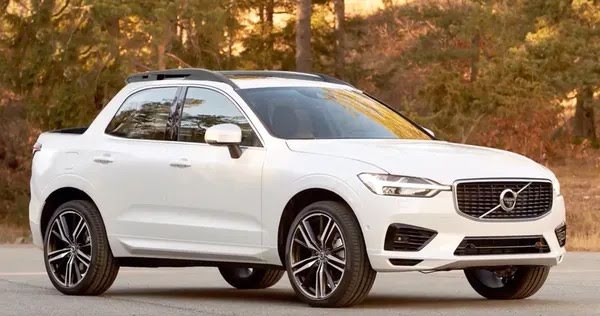
Well, one major advantage Volvo may have if it decides to launch its true pickup is in relation to the competition. Some of the industry rivals have been following the trend of launching through subsidiaries.
From Nissan’s Infiniti to GM’s Cadillac to Ford’s Lincoln, these guys have launched premium pickups via subsidiaries.
A premium Volvo pickup might just have what it takes to unsettle the market, barring some top-level innovations.
In addition, Volvo will have to square up to the elephant in the room, the first Tesla electric pickup. Although Volvo has a plug-in electric vehicle configuration, they should consider working on a fully electric pickup.
Why Wouldn’t They?
Having the sort of advantage they hold with their best-selling SUVs, some may argue that Volvo sticks to what they do best. For this reason, Volvo should not look to make a pickup truck.
Well, this may seem like a comfortable and less risky approach if you look at how the Mercedes Benz X-Class fared.
One major disadvantage that puts off carmakers from making luxury pickups is the issue of price. Most lovers of pickups are put off by the expensive prices of luxury pickups.
They end up buying SUVs and sedans as alternatives to luxury pickup trucks. There are speculations that the new truck will cost from at least $40,000 to $50,000.
Anything above the $50,000 mark may prompt a rational buyer to buy some cheaper luxury sedan. So pricing may well just be the deal breaker in Volvo scrapping any pickup plans they have.
Conclusion
Finally, one of the reasons for Volvo’s solid reputation is safety. The Swedish car giant has some of the best safety in the world in its sedans and SUVs.
However, when it comes to pickup trucks, it is not so easy to deliver a similar level. Pickups from Volvo may never be as safe as its cars SUVs.



5 Comments
here in Wisconsin we see all kinds of “big 3” pickups rotting out before they’re 10 yrs old and nearly worthless because bodyshop costs. My 2007 Volvo with 251,000 miles and still-perfect body has them dazed and confused. on top of that Im driving a much safer vehicle than they are. I would applaud Volvo for delving back into the pickup market with a full-frame truck. Too many Americans quickly “get tired” of what they’re driving so they use it as an excuse to trade up and end up in a never-ending cycle of payments. I also like buying great vehicles used, when wealthier folks are done with them so I dont have to stomach the big prices of new.
That’s the best way to do it!
I just saw the sexist semi truck in San Diego on Sunday and of course it was a Volvo. It was that beautiful grey color, and I dreamt about having that in my driveway. I would drive THAT while waiting for a pick-up to come on to the market.
Pierre, good thoughts, thanks for sharing.
The “see the world” demographic who don’t want to fly or stay in a hotel is indeed a big thing now, with Covid.
I think Volvo would have to commit to a RWD or 4WD powertrain, because so many pick-up truck buyers intend to haul weighty trailers – boats and mobile homes. 5000 lbs. of towing weight is pretty limiting, when you consider the 2021 Ford F-150 can be configured to haul up to 14,000 lbs.
An electric drive-train offering per-wheel motors might offer the best alternative to the classic RWD or 4WD design for pulling heavy trailers, and such a “modular” design lends itself well to working with the mobile home giants to have an integrated motive/braking system with a “motive trailer”. The “follower” vehicle would incorporating its own electric wheel power and braking, completing an integrated multi-vehicle system with superb handling and safety characteristics.
This opens the door to offering competitive advantages over the traditional “passive” pulled trailer combo. For example, a mobile home component could house 3X as much battery storage as the lead vehicle, giving the combo a recharge driving range over 1000 miles. With this much stored electrical power, the amenities offered in the mobile home could be freed from requiring an external AC hookup.
If I were Volvo or Geely, I would even consider buying a mobile home trailer asset, and bringing to market the above integrated multi-vehicle design with Swedish comfort and styling — under one company roof.
The market I would be striving to serve is an itinerant “see the world” demographic who want to enjoy an extended, comfortable road lifestyle — as an alternative to renting or owning a fixed domicile.
Volvo should not come into the pickup-truck market as a “me too” gesture, but rather reimagine the possibilities from the ground up.