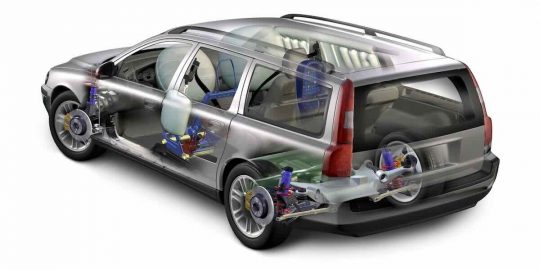
In 2000 for the North American market, Volvo launched three new P2 models: the S60 compact medium-sized sedan, revised V70 and V70 Cross Country, and also launched the P1 S40/V40 pair.
Ok, we all know that… except for one interesting fact: in Europe these same models could be had as Bi-Fuel Volvos, and they could switch fuels at the owner’s discretion. Unfortunately these cars didn’t make it to US shores, but they are very interesting in regardless. Let’s take a look at this special type.
2001: Bi-Fuel Volvos Debut in Europe
Electrification technology was not yet mature, so alternate fossil fuels beyond gasoline and diesel were adopted for everyday use in Europe. In 2001 Volvo introduced “Bi-Fuel” engines using Compressed Natural Gas (CNG) or Liquefied Petroleum Gas (LPG). Why? Because these fuels reduce CO2 by up to 20%.
These weren’t the first alternative fuel Volvos made; Volvo Cars’ Bi-Fuel technology for methane made its debut in 1995 in a Volvo 850, but the turn of the millennium saw an explosion in the number of Volvo models that ran dual fuels: V70, S60, S80, C30, S40, and V40. European governments gave tax incentives to fuel (get it?) dual fuel cars, and a decent number of CNG and LPG filling stations were built to power these cars.
According to a 2005 Volvo press release, “The cost of a methane-fuelled engine makes the price of a new car slightly higher, but driving on methane [CNG] generally means significantly lower operating costs – and the higher purchase price is quickly recovered through lower fuel costs. Depending on the market, the cost of driving on methane is 20–60 percent lower than for petrol…”
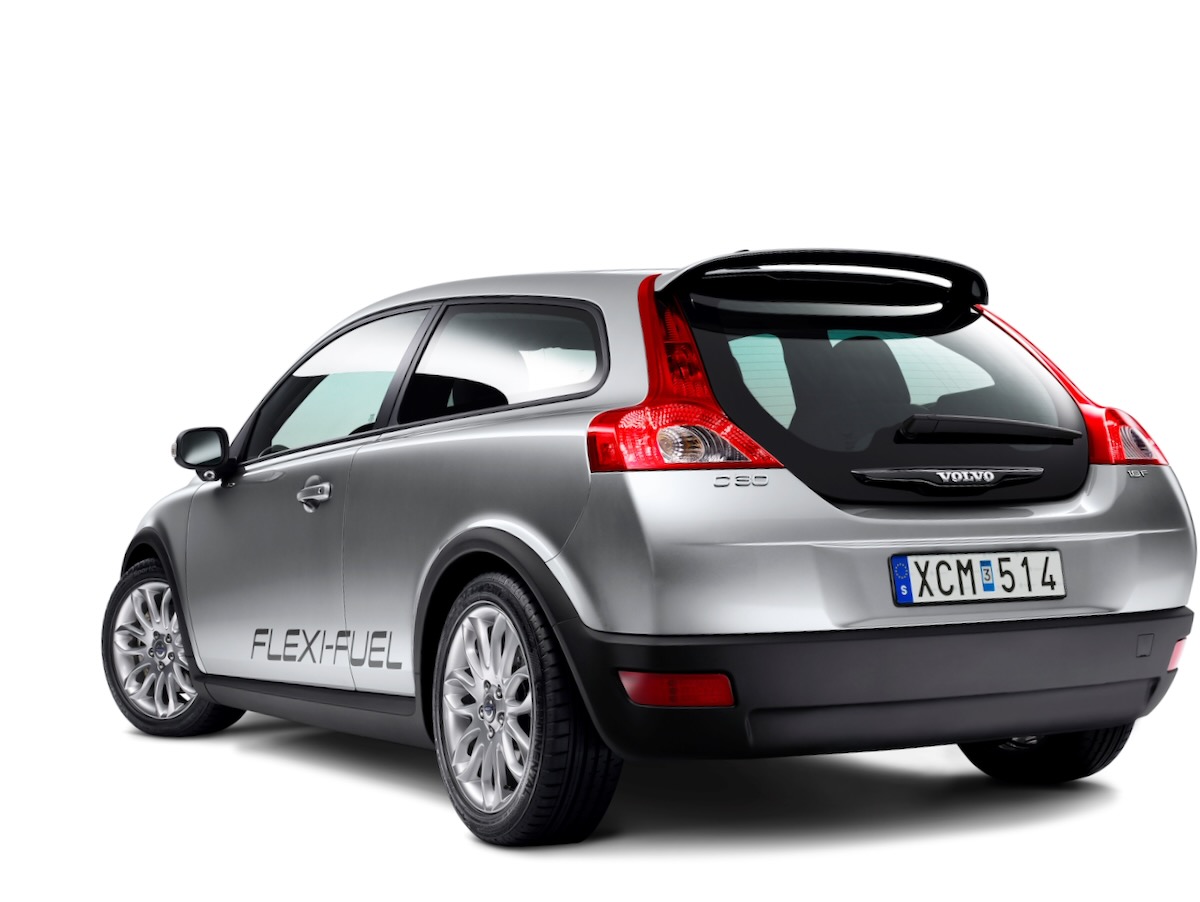
The combination of lower purchase price combined with lower fuel costs was very attractive to the Bi-Fuel cars’ buyers.
The typical five-cylinder 2.4-litre Bi-Fuel engine made 140hp and gasoline was considered the backup fuel, not primary.